Protecting People and Equipment: The Role of Steam Hoses in Winter
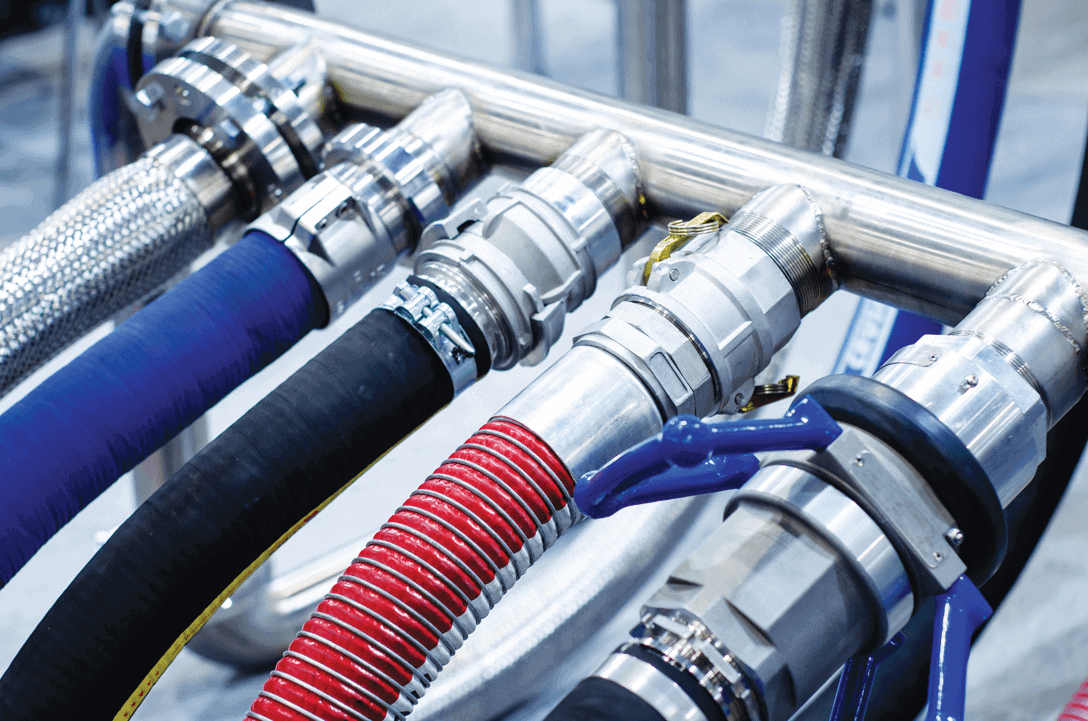
As temperatures drop, industrial operations across the country face a familiar but costly challenge: frozen equipment. From chemical plants and refineries to rail yards and loading docks, exposure to freezing conditions can bring critical operations to a complete stop. One of the most effective, and often overlooked, tools for preventing these disruptions is using the right hoses.
Steam hoses play a vital role in winter readiness. When temperatures dip below freezing, steam hoses are used to blow hot steam onto valves, pipes, pumps, and other exposed equipment to safely thaw them before damage occurs. In many plants, 50-foot steam hoses are staged near critical equipment so crews can respond quickly when cold weather strikes.
However, not all hoses are created equally, and using the wrong hose for steam applications can lead to premature failure, safety risks, and unplanned downtime.
Why Steam Hose Construction Is Critical
Steam is unforgiving. With temperatures commonly ranging from 250°F to 350°F, steam can rapidly degrade standard rubber hoses that aren’t designed for high heat. That’s why steam hoses are manufactured with a specialized internal rubber compound engineered specifically to withstand sustained high temperatures.
While most steam hoses are rubber, metal hose is also used in certain applications. However, when metal hose is selected for steam service, it must be properly insulated. Many metal steam hoses are fitted with a silicone-insulated fire jacket that helps reduce surface temperature, protecting workers from burns if the hose is handled during operation.
Choosing the correct hose construction, rubber or metal, isn’t just about performance. It’s about safety, longevity, and ensuring the hose operates within its designed parameters.
Planning Ahead: The Key to Avoiding Winter Downtime
Every winter tells the same story. A cold front is forecasted, temperatures are expected to drop below 32°F, and suddenly suppliers receive urgent calls for hundreds of steam hose assemblies, often with little notice. By that point, lead times, material availability, and fabrication capacity become major constraints.
Winter preparation should begin well before the first freeze. In many regions, steam hose season effectively runs from October through April. Planning ahead allows plants to:
• Avoid emergency procurement and inflated costs
• Ensure proper hose specifications are selected
• Prevent equipment damage caused by freezing
• Maintain continuous operations during cold weather events
Being prepared with the right steam hoses in place can mean the difference between a smooth winter and costly, unplanned shutdowns.
Where Environmental Exposure Meets Operational Risk
Steam hoses rarely operate alone. They are part of a broader group often referred to as SWAN hoses (Steam, Water, Air, and Nitrogen). These hoses are essential across nearly every plant and are frequently left outdoors year-round, exposed to sun, heat, freezing temperatures, and harsh weather.
Over time, environmental exposure causes rubber hoses to fade, crack, and degrade. Once cracks form and reinforcement is exposed, the hose can no longer perform as designed and becomes a failure risk. That’s why inspections before turnaround season are critical.
Plants should prioritize planning and inspection for these four hoses first, as they are universally used and directly impact safety and operational readiness.
Where Planning, Engineering, and Fabrication Come Together
When it comes to preparing for winter operations, planning and execution are everything, and that’s where Lamons stands apart.
Lamons doesn’t wait for cold weather to arrive. Our teams proactively plan for seasonal demand, placing material orders months in advance to ensure availability when customers need it most. For example, our Beaumont branch consistently plans ahead by ordering and stocking steam hose assemblies well before winter begins, ensuring their customers are ready long before temperatures drop.
This forward-thinking approach removes uncertainty from supply chain and gives customers confidence that critical hoses will be available when it matters most.
Extensive Hose Fabrication Capabilities
Lamons offers a full range of rubber and metal hose solutions, fabricated in multiple locations across the U.S., including Houston, Midland, Baton Rouge, Rancho, and Martinez.
Our capabilities include:
• Rubber hose fabrication up to 8-inch diameter
• Metal hose fabrication up to 12-inch diameter, a capability few suppliers offer
• Custom lengths and configurations
• Ground joint couplings for easy equipment connection
• Silicone fire jackets for insulated metal steam hose
Our ASME Section 9–certified welders and experienced fabrication teams ensure every hose assembly is engineered for performance, safety, and durability.
Engineered Solutions, Not Just Products
Lamons brings engineering expertise into the field. Our team works directly with customers to ensure each hose is properly selected for its application, operating conditions, and environment. This ensures hoses are used within their design limits, maximizing service life and minimizing risk.
Ready for Every Industry and Plant’s Standards
While steam and utility hoses are critical in oil and gas, Lamons supports a wide range of industries, including chemical processing and manufacturing, construction, food manufacturing, wastewater removal, trucking and transportation, and more.
From product hoses and vapor hoses on trailers to metal hoses used in pallet trucks and tank unloading systems, Lamons delivers reliable hose solutions wherever they’re needed.
Because hose color-coding varies by facility, Lamons stocks red, green, yellow, blue, and black hoses to align with plant-specific requirements. That flexibility helps streamline compliance, safety, and identification across your operation.
Plan Now, Operate Confidently All Winter
Cold weather is predictable, but downtime doesn’t have to be. By planning ahead, inspecting critical hoses, and partnering with a manufacturer that understands seasonal demand, you can protect your equipment, your people, and your productivity.
Lamons combines planning, engineering expertise, and nationwide fabrication capabilities to ensure you’re ready before winter arrives. When it comes to steam and utility hoses, preparation isn’t optional, it’s essential.
Let Lamons help you plan today, so your operations keep moving tomorrow.